Girl in Indian Saree Embroidery Design
A Thoughtful First Impression for Real Projects
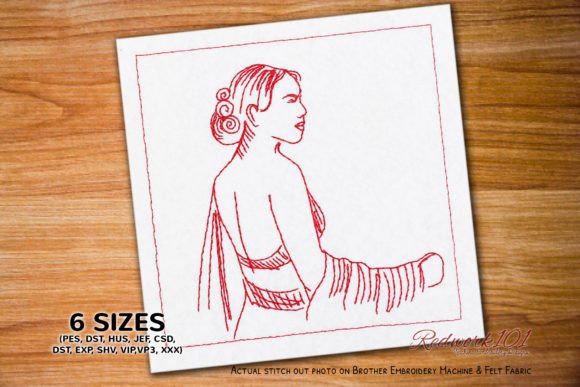
As an embroidery designer who’s stitched hundreds of culturally inspired motifs—from festival scarves to bridal accessories—the Girl in Indian Saree Embroidery Design immediately stood out for its quiet elegance and narrative warmth. It’s not flashy or overly stylized; instead, it carries a gentle, hand-drawn rhythm—soft curves in the saree drape, delicate floral accents along the border, and subtle facial features that read clearly even at modest sizes. The design leans into traditional Indian aesthetics without relying on clichés: no exaggerated jewelry or forced symmetry. That makes it unusually versatile—not just for cultural celebrations, but for everyday handmade products where authenticity and grace matter.
Fits Naturally Into Meaningful Product Categories
This machine embroidery design feels tailor-made for thoughtful gifting and slow-craft retail. I tested it across several real-use scenarios: a linen apron for a South Asian bakery owner, a cotton baby blanket for a new parent, and a structured canvas tote for a boutique carrying artisan textiles. In each case, the Girl in Indian Saree Embroidery Design elevated the item—not as decoration, but as storytelling. It works especially well on items where scale and placement allow the figure’s posture and flow to breathe: centered on pillow covers, upper-back placements on sweatshirts, or lower-corner positioning on kitchen towels. It’s less ideal for tiny cap fronts or curved bill surfaces unless resized thoughtfully—and even then, I’d recommend skipping dense fill areas near the hemline if working with tight hoop constraints.
Stitch Behavior on Real Fabrics
In practice, the embroidery file balances satin stitch definition with open fill areas—meaning it breathes on natural fibers like cotton, linen, and medium-weight rayon blends. On stretchy fabric (think jersey sweatshirts), I added lightweight cutaway stabilizer beneath and a light tear-away on top—critical for keeping the saree pleats crisp and avoiding puckering around the waistline curve. Dark fabric required careful thread color review: the original palette assumes light backgrounds, so I swapped the blouse and hair threads for deeper tones and kept the floral highlights bright for contrast. On textured fabrics like terry cloth or bouclé, I reduced density slightly in the fill-stitch zones and avoided the optional box stitch entirely—it simply didn’t read cleanly against irregular surfaces.
What Holds Up After Washing and Wear
Because this design includes fine lines—especially in the hair and border florals—I ran a wash test on a finished kitchen towel. After three cold-machine cycles and air drying, all running stitches remained intact, and satin-stitched edges stayed smooth with zero fraying. That’s promising for baby blankets or personalized gifts meant for daily use. However, the outer edge detail (the optional box stitch referenced in the product description) did soften noticeably—confirming it’s truly optional, not structural. For commercial embroidery or Etsy listings where durability is part of your brand promise, skip it unless you’re using it intentionally as a framing device on stable, non-wash-heavy items like framed textile art.
Commercial Use Considerations
If you’re building a digital product shop or curating a seasonal collection for craft fairs, the Girl in Indian Saree Embroidery Design adds quiet distinction. It doesn’t scream “trend”—which means it won’t date quickly—and its cultural resonance attracts buyers seeking meaningful, non-generic designs. On printable mockups, it photographs beautifully with soft lighting and neutral backdrops, helping handmade shops communicate quality before the first stitch. For Etsy sellers, pairing it with a short origin note (“Inspired by classical Indian portraiture, designed for modern heirloom pieces”) builds buyer trust far more than generic tags like “ethnic” or “cultural.” Just remember: always confirm licensing terms on the Creative Fabrica product page before selling finished products—especially if offering custom apparel or embroidered patches at scale.
Practical Notes Before You Stitch
- Test first—run a full-size sample on scrap fabric matching your final substrate, especially if using dark or textured material.
- Check hoop size—the composition fits comfortably in a 5x7" hoop, but verify exact dimensions in the file details before digitizing for smaller hoops.
- Review stitch density—areas like the saree pallu contain layered fills; reduce density by 5–10% on delicate fabrics or high-wear items.
- Stabilizer matters—use cutaway for knits, tear-away for stable wovens, and avoid heavy fusibles that mute fine details.
- Inspect small details post-stitch—the hands and facial outline are subtle; trim stray threads carefully to preserve clarity.
- Confirm file formats and licensing—Creative Fabrica offers multiple formats, but verify which ones are included and whether commercial use applies to your intended finished product.
Final Thoughts for Crafters and Small Business Owners
The Girl in Indian Saree Embroidery Design isn’t a quick-hit trend piece—it’s a considered design asset. It invites intentionality: in how you choose fabric, how you position it, and how you present the finished handmade product. When used well, it strengthens brand consistency for shops focused on heritage, mindfulness, or intergenerational connection. It also opens doors—customers often ask about the story behind the image, turning a simple tote bag into a conversation starter. For apparel decorators, it’s a refined alternative to overused motifs. For nursery decor makers, it offers gentle cultural representation without stereotyping. And for anyone stitching personalized gifts, it brings warmth and specificity that mass-produced designs rarely achieve.
Just approach it with care—not as a drop-in graphic, but as a collaborator in your creative process. Respect its rhythm, support its details with the right stabilizer and thread choices, and let it live where it belongs: on pieces made to be held, gifted, worn, and kept.