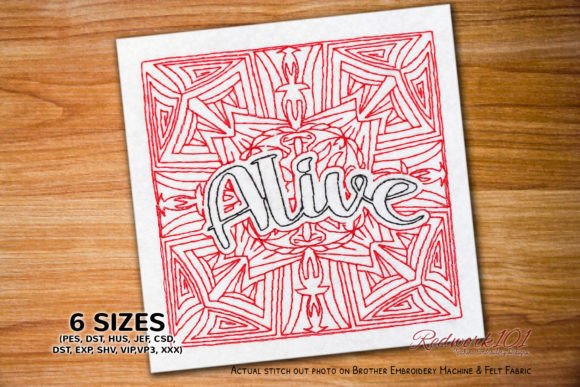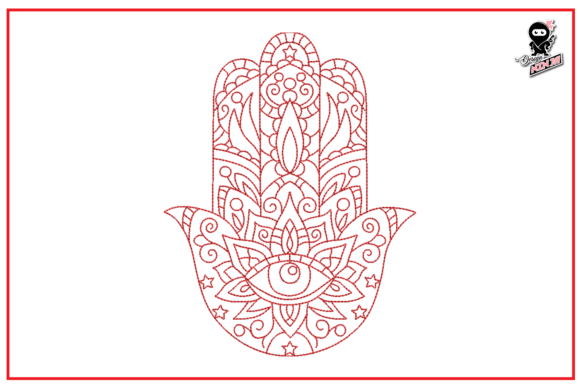
Hamsa Hand Redwork Embroidery
First Impression: Bold, Timeless, and Quietly Spiritual
As an embroidery designer who’s prepped over 200 craft fair booths—and shipped thousands of embroidered tote bags, tea towels, and patches—I’ll say it plainly: Hamsa Hand Redwork Embroidery lands with quiet confidence. It’s not loud or trendy; it’s rooted. The “redwork” cue tells me immediately this design leans into traditional hand-stitched heritage—clean lines, minimal shading, strong outlines—while the Hamsa symbol adds layered meaning: protection, blessing, balance. It reads as elegant *and* accessible—not too mystical for mainstream shoppers, not too generic to feel mass-produced. In a booth full of florals and fonts, this stands out as intentional, calm, and handmade in spirit—even when stitched by machine.
Where It Shines: Craft Fair-Ready Product Pairings
This isn’t a one-size-fits-all embroidery file. It thrives where clarity, symbolism, and subtle storytelling matter. Here’s how it performs across real-world craft fair products:
- Tote bag design: Perfect centered on natural canvas or unbleached cotton—large enough to read at 6 feet, detailed enough to invite closer inspection. Avoid overly busy prints underneath; let the redwork breathe.
- Apron embroidery: Ideal on the chest pocket or lower front panel. Its symmetry reads beautifully on curved apron fabric, and the red thread pops against denim, linen, or oatmeal twill.
- Tea towel embroidery: A standout on flour-sack or waffle-weave towels. The stitch density holds up well on textured surfaces—if stabilized correctly (more on that below).
- Embroidered patch: Highly adaptable. Works as a sew-on or iron-on (with proper backing), especially on denim jackets, market bags, or kids’ backpacks. Customers love collecting symbolic patches—and this one feels meaningful, not decorative-only.
- Pillow cover & small pouch: At medium scale (3.5–4.5”), it anchors the piece without overwhelming. Great for gifting—think “new home,” “wellness,” or “graduation” bundles.
- Caps & curved surfaces: Proceed with caution. The Hamsa’s open palm and fingers require precise digitizing for stretch and contour. Test on scrap first—especially if using structured caps or baseball-style fabric.
What Makes It Sell—And What Might Slow You Down
Hamsa Hand Redwork Embroidery works because it’s instantly legible, emotionally resonant, and versatile across audiences—from yoga studios to boutique gift shops. At a craft fair, customers pause longer for symbols that feel personal but aren’t overly niche. This hits that sweet spot.
That said, don’t assume it’s plug-and-play. As a working embroidery designer, I’ve seen redwork files fail when:
- Stitch density is too high for lightweight fabric—causing puckering on tea towels or thin cotton pouches.
- Small interior details (like the eye in the palm or fine finger contours) vanish on dark fabric unless thread contrast is sharp—test with burgundy or navy, not just black.
- The design is shrunk below 2.75” — delicate lines blur, and the Hamsa loses its definition. It’s not a tiny accent; it’s a statement—even at modest scale.
- It’s placed on heavily textured or looped towels without added tear-away stabilizer underneath. Redwork relies on clean surface stitch laydown.
Booth Impact & Buyer Engagement
In person, Hamsa Hand Redwork Embroidery draws attention through contrast—not color explosion, but visual rest. While glittery or maximalist designs grab eyes fast, this one holds them. Shoppers pick up a tote, turn it slowly, trace the outline with their fingers, and often ask, “What does this mean?” That’s your opening to connect—and convert.
It strengthens brand consistency for small shop owners who curate around intentionality: wellness, mindfulness, heritage craft, or slow living. On Etsy, paired with thoughtful copy (“Hand-stitched in spirit, machine-embroidered for durability”), it supports premium pricing. And yes—it photographs exceptionally well for digital listings: clean lines translate crisply in printable mockups and flat-lay shots, especially with neutral backdrops and soft natural light.
Practical Designer Notes Before You Stitch
Before cutting your first production run, do these six things:
- Test the embroidery file on scrap fabric—same weight and weave as your final product. Watch for skipped stitches or thread breaks in tight curves.
- Check thread contrast on every base fabric you plan to use. Redwork traditionally uses matte red thread, but consider rust, brick, or even deep terracotta for warmth on cream or oat tones.
- Review spacing and underlay. Does the design float cleanly? Are satin columns tight enough to prevent gaps between fingers? Redwork shouldn’t look “filled in”—it should feel outlined and intentional.
- Confirm hoop size and stabilizer needs. If the design exceeds 4” wide, verify your machine’s max hoop capacity—and whether your stabilizer combo (cutaway + tear-away) prevents shifting on stretchy or slippery fabrics.
- Create at least one real mockup—not just a digital preview. See how it drapes on a tote, how it feels in hand, how the thread catches light. That version becomes your booth sample and your best sales tool.
- Verify commercial licensing before selling finished products. As an Etsy seller or small shop owner, you need explicit permission for resale—don’t rely on vague phrases like “perfect for gifts.” Read the license terms. If unclear, contact the designer.
Final Thought: A Design That Sells Because It Feels True
Hamsa Hand Redwork Embroidery isn’t flashy—but craft fair buyers are choosing authenticity over novelty more than ever. It fits seamlessly into curated collections: alongside Zentangle-inspired hoop art, modern farmhouse kitchen goods, or mindful handmade accessories. It’s a machine embroidery design that doesn’t try to mimic hand-stitching—but honors its rhythm, restraint, and reverence. For the embroidery business owner who values repeatable quality, emotional resonance, and booth-ready impact: this is a keeper. Just stitch it right, stabilize it well, and let the symbol speak for itself.