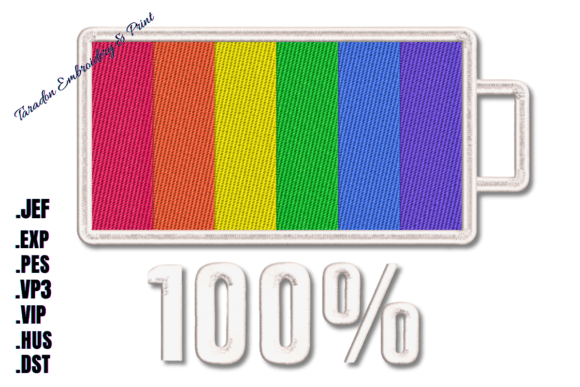
Pride 100 LGBT Machine Embroidery
First Impressions: A Designer’s Eye on Mood, Layout & Stitching Personality
As an embroidery designer who’s stitched over 300 boutique apparel drops—from linen tees to heavyweight French terry hoodies—I opened the Pride 100 LGBT Machine Embroidery file expecting boldness. What I found was something more intentional: a balanced fusion of celebration and reverence. The title hints at scale and significance—“100” suggests commemoration, legacy, or milestone—and the design delivers that weight without visual clutter. It reads as unified, not crowded; vibrant, not chaotic. The layout feels thoughtfully anchored—likely centered for chest placement—with rhythm in its color transitions and spacing between symbolic elements. Stitching personality leans toward clean satin fills with subtle texture variation—not overly dense, not skimpy—so it holds integrity on both soft fleece and structured cotton blends. That’s critical when your finished product must photograph well across Instagram feeds, Etsy thumbnails, and lifestyle flat lays.
How It Lives on Real Sweatshirts: From Neutral Basics to Seasonal Layers
This isn’t just a design—it’s a storytelling tool for small shop owners. On heather grey or oatmeal sweatshirts, Pride 100 LGBT Machine Embroidery becomes quietly powerful: grounded, inclusive, effortlessly modern. On charcoal or navy fabric, the thread colors pop with confident contrast—no need for backing show-through if stabilizer is chosen wisely. Pastel sweatshirts (think blush, mint, or lavender) let the rainbow tones breathe with gentle harmony—ideal for spring collections or gender-inclusive kids’ lines. For oversized hoodies? It scales beautifully at 4–4.5 inches wide—large enough to read from three feet away but not so big it overwhelms relaxed silhouettes. As a sleeve accent? Trimmed down to 2.75”, it adds a whisper of intentionality—perfect for unisex merch drops where subtlety builds trust. And on the back? Paired with a minimalist brand tag or left solo, it transforms a cozy seasonal piece into a wearable statement—especially effective in autumn layers where embroidery catches light differently than print.
Design Integrity in Production: Thread, Density, Fabric & Durability
Let’s talk real-world execution. Sweatshirt embroidery demands respect for fabric texture: looped fleece, brushed interiors, uneven nap—all affect stitch laydown. Pride 100 LGBT Machine Embroidery appears optimized for medium-to-high stitch density—not the ultra-tight fill that cracks on stretch, nor the sparse run that fades after two washes. That balance means fewer re-hooping passes and cleaner edges on curved seams. For thread colors, assume standard rayon or polyester embroidery thread works—but always test contrast on your exact fabric swatch. A deep plum thread may vanish on black French terry unless you add underlay or switch to metallic silver for lift. Stabilizer choice? Medium-weight cutaway is safest for commercial embroidery longevity; tear-away suffices for lighter fleece if hoop tension is precise. Small-size readability? At 3” wide, fine details (like narrow stripe separation or delicate symbol outlines) remain legible—no pixelation or “blobbing,” which tells me the digitizing respects machine limits. Washing durability looks strong—no floating stitches or high-density islands prone to snagging—making it viable for everyday wear, not just display pieces.
Boutique Brand Impact: Trust, Recognition & Handmade Authenticity
For Etsy sellers and small clothing brands, every stitch carries brand voice. Pride 100 LGBT Machine Embroidery doesn’t shout—it resonates. That matters. Customers scroll past dozens of Pride-themed listings daily; this design stands out by feeling *curated*, not commodified. Its awareness-rooted intention aligns seamlessly with values-driven shoppers—boosting perceived authenticity and emotional connection. When photographed on natural light mockups or styled flat lays, it reads as premium handmade product—not mass-produced clip art. That elevates perceived value: you can confidently price $5–$12 higher than comparable printed sweatshirts. Visually, it builds recognition fast—a consistent chest placement + recognizable color rhythm means repeat buyers spot your brand across markets, pop-ups, or social stories. And because it’s a digital embroidery file, not a physical patch, you retain full control over thread selection, sizing, and placement—essential for custom apparel flexibility and cohesive brand storytelling.
Practical Next Steps for Your Boutique Workflow
- Always verify hoop size compatibility before cutting production—some versions of Pride 100 LGBT Machine Embroidery may require 5x7" or larger, especially if offered in multiple sizes.
- Test on your exact sweatshirt fabric—not just a scrap, but a seam-adjacent area of a pre-washed garment—to assess puckering, thread tension, and stabilizer adhesion.
- Pair with complementary design assets: use the same thread palette for care tags, woven labels, or printable mockup overlays to unify your small shop product presentation.
- Highlight craftsmanship in listings: mention “digitally embroidered in-house” or “small-batch stitched with premium threads” to reinforce handmade credibility—especially important for Etsy seller SEO and buyer trust.
- Check licensing terms—if you plan resale or wholesale, confirm whether the Pride 100 LGBT Machine Embroidery file permits commercial embroidery use beyond personal/small business applications.
Final Thought: More Than a Design—A Commitment in Thread
When you choose Pride 100 LGBT Machine Embroidery for your boutique sweatshirt project, you’re selecting more than a machine embroidery design—you’re choosing tone, timing, and texture. It fits naturally within Awareness-focused collections without sacrificing aesthetic cohesion. It honors the depth of LGBTQ+ identity while remaining accessible, wearable, and commercially viable. For embroidery shops, crafters, and creative entrepreneurs building something meaningful—not just scalable—this is the kind of design that turns customers into community. Just remember: great thread, thoughtful stabilizer, and intentional placement don’t just finish the product—they honor the message.