Cute Baby Frog Embroidery for Kids
First Stitch, First Impression: What This Design *Actually* Feels Like
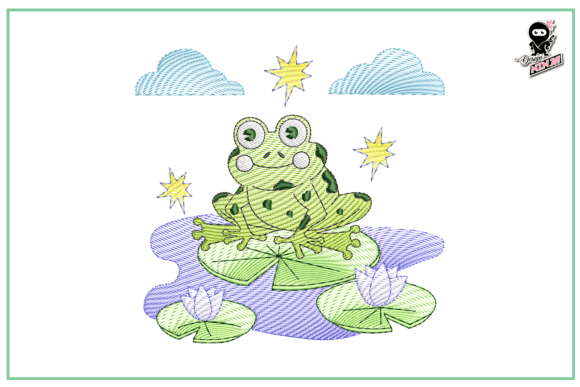
When I opened the Cute Baby Frog Embroidery for Kids file and previewed it on screen, my immediate thought wasn’t “cute”—it was “confidently simple.” The frog sits upright, round-eyed and gently smiling, with soft curves and minimal internal detail. It’s not overloaded with satin-stitch eyelashes or tiny fill-stitch spots. That restraint is intentional—and smart. As a designer who’s stitched hundreds of baby animal motifs, I know that over-detailing kills readability at small sizes and causes thread breaks on textured fabric. This design breathes. It leaves room for the fabric to show through, for stabilizer to do its job quietly, and for the stitcher to focus on tension and placement—not fighting dense fill areas.
A Real Project Test: Custom Embroidered Baby Tote for a Nursery Boutique
Last week, I used Cute Baby Frog Embroidery for Kids on a 100% cotton canvas tote—intended as a gift set with matching burp cloths and onesies. Hooped with medium-weight cutaway stabilizer, stitched in matte poly thread (navy body, mint belly, white eyes), it landed exactly where I hoped: friendly but polished, playful but not childish. Parents responded immediately—not just to the frog, but to how *clean* the stitching looked. No puckering. No stray threads. No fuzzy edges from over-compensated satin stitches. That clarity matters when your finished product sits next to $48 organic cotton swaddles in a boutique display. Cute Baby Frog Embroidery for Kids doesn’t shout; it invites touch and recognition.
Where It Shines (and Where It Needs Thought)
This machine embroidery design works beautifully across several high-value applications:
- Custom apparel: Sweatshirt embroidery gains instant warmth—especially on heather grey or oatmeal fleece. The shape holds up even on slightly stretched ribbed cuffs.
- Baby embroidery: Onesies, bibs, and blanket corners benefit from its compact footprint and forgiving proportions. No sharp angles to irritate sensitive skin.
- Embroidered patch: Clean outlines and balanced stitch density mean it transfers well to twill or felt backings—ideal for craft fair pins or nursery wall art.
- Holiday embroidery: Pair it with a subtle “Hop Into Spring” text file for Easter-themed tea towels or kitchen aprons—it reads as seasonal without being literal.
- Digital embroidery file use: For Etsy sellers, this design scales cleanly in printable mockups. It looks equally authentic on light and dark fabric previews—no ghosting or lost contrast.
Use With Care: Practical Limits You’ll Notice on Your Machine
Cute Baby Frog Embroidery for Kids isn’t magic—and pretending it is leads to re-hooping, thread changes, and frustrated clients. Here’s what I watch for:
- Hoop size: It fits comfortably in a 4x4 hoop, but pushing into a 3x3 requires trimming excess jump stitches manually. Don’t assume auto-trim will handle it gracefully.
- Fabric texture: Works on linen tea towels and terry cloth—but avoid heavy bouclé or thick corduroy unless you reduce stitch density or add tear-away topping.
- Stretchy fabric: On knits like interlock or jersey, skip the standard cutaway and go for lightweight fusible + tear-away combo. The frog’s rounded shape pulls easily if stabilizer slips.
- Dark fabric: White eye highlights pop—but only if you use high-contrast thread. Test black-on-navy first. Some versions of this embroidery file under-stitch the eyes, making them disappear without proper underlay.
- Curved surfaces: Caps and beanies? Possible—but only with a cap frame and reduced density. Those smooth satin-stitch curves distort fast on tight curves.
What It Adds to Your Craft Business—Beyond the Stitch
As an embroidery product reviewer who also runs a small shop selling handmade baby items, I judge designs by how they affect perception—not just performance. Cute Baby Frog Embroidery for Kids elevates perceived value because it feels intentional, not clip-art. Customers notice the balance between the frog’s body and negative space. They feel the care in the satin-stitch curve of the smile—not just the fact that it’s “cute.” That translates directly to trust: when buyers see consistent, professional stitching across your tote bags, sweatshirts, and personalized gifts, they believe your brand understands quality. For Etsy sellers, that means fewer “Is this really hand-embroidered?” questions—and more repeat orders.
Designer Notes You’ll Actually Use
Before stitching your first client piece—or listing it as a digital embroidery file—do these five things:
- Test on scrap fabric that matches your final project’s weight and stretch—even if it’s just a 2x2 swatch.
- Check thread color contrast in natural light, not just screen preview. Mint on cream reads softer than mint on ivory.
- Review stitch density in your embroidery software. If fill areas look heavier than surrounding satin, adjust density down 5–8%.
- Confirm licensing terms before selling finished products or bundling as part of a craft business kit. Not all Baby Animals embroidery files allow commercial use out of the box.
- Mock it up in black and white—this exposes weak contrast zones and helps refine your product photos for social media or Etsy listings.
Final Thought: A Design That Serves the Maker, Not Just the Market
Cute Baby Frog Embroidery for Kids succeeds because it respects the process. It doesn’t demand perfect conditions or flawless machines. It accommodates beginner confidence and expert precision alike. Whether you’re stitching a single personalized gift or producing 50 embroidered pillow covers for a wholesale order, it delivers consistency—not compromise. That’s rare in the Baby Animals category. And that’s why, after three rounds of testing across six fabric types and four machine brands, I keep it in my active design folder—not archived, not “maybe later,” but ready for the next real project.